Pages

Wednesday, August 20, 2025

25. Parents, Calm Down!

I am writing in this blog after more than 11 years. Life has moved on, and Hridhima has grown up.

If you are here for the first time, you might want to start from the beginning: Chapter 1


A few days back, we had an interesting discussion with our daughter. She wanted to change the education system because it’s focused on mugging up topics, half of which the kids forget just one hour after they come out of the exam hall. She wanted education to be more experiential. Students should be exposed to a core foundation (reading, writing, math, and science basics) but also allowed more freedom to choose subjects or projects that spark curiosity. 


Science should be made relatable with examples from everyday life so that students can connect to it instead of seeing it as an exotic topic meant for geeks. The modern school curriculum forces students to remember names and formulas, and is tailored for jobs in the current era. Instead, it should focus on holistic development that teaches skills, like respect, empathy, cleanliness, leadership, creativity, and inquisitiveness, that are useful in any era.

There are practical barriers to how much and how fast we can change the system. But she was right, it needs a change. And some change comes directly from the parents. That got me thinking, and hence this post.


My dad wanted me to be a doctor. He wanted me to sit in the Engineering (Joint Entrance Examination -JEE) and Medical entrance exams. But I was always a rebel. I never wanted to be an engineer or a doctor. For that, I have to thank my parents, who allowed me to be a rebel. I eventually went to IIT for a master’s degree (not JEE) in Earth Sciences. That’s when I realised that I had made a good decision. This whole rat race for the cream and cherry of the cake was not for me.


It is natural for parents to be concerned about their kids' future, but the concern is slightly misplaced. Parents are afraid that if the child does not come out on top, they will struggle in later life. But in the real world, school toppers hardly change the world. Statistics don’t favour toppers when it comes to high-tier jobs, and a professional career is where most of them end up eventually. That’s probably because one of the weakest skills of toppers is teamwork. Backbenchers, who often team up for mischief, are actually better at that.

Because of this misplaced concern and viewing the world as competitive and a place where only achievers are successful, parents end up putting immense pressure on kids. They send their children for private tuition, early education, and even IIT coaching from as early as class 5. 


Studies show that in India, or other developing countries, there is no correlation between early education and performance. In fact, what correlates well with good performance is parents' education. The higher education the parents have, the better the performance of the kids. Also, the family’s financial background does matter. That basically determines how the kid is groomed at home. Of course, students may benefit from extra tuition if parents do not have the necessary skills and if the teachers in the school are not good enough. But it is not a blanket truth and does not apply to most city dwellers.

Expensive schools also DO NOT mean better performance. What matters is the quality of teachers. There are many institutes that only hand-pick the best students. The good results coming from these schools only reflect the students they chose and nothing about the institute itself. I can say the same for IITs too.

All this excessive pressure has a bad influence on kids’ mental health. Studies done on Indian students found that teenagers from affluent families, doing well in studies, often struggle with overwhelming expectations to excel in academics, sports, and other extracurricular activities. Even though they have everything they need, they are still drowning under pressure. The cause of this paradoxical phenomenon is the “achiever mindset” promoted by parents. This is why depression  and even suicide is rising amongst kids at an alarming rate.

The kids in the cities are growing up without any needs or challenges. They have easy access to everything from the best schools to the newest gadgets to high-speed, round-the-clock internet. What they are struggling with is finding the right purpose. On top of that, social media raises their expectation of success by showing perfect bodies, perfect vacations, perfect achievements, and perfect lives. Imperfections are outcasts on social media, where self-worth is measured in the number of likes. In fact, I once heard a class two student not inviting her friends to her home because she thinks her curtains are cheap. That's the kind of competition we are teaching our kids. Their quality of friendship now depends on how lavish their birthday parties are and what they give back as return gifts.

You will see parents boasting about their kids’ performance on social media, highlighting their medals and certificates, putting more pressure on the kids to keep achieving. And when they fail, and everyone fails at some point in life, they just cannot handle the loss because the achievement culture also brings shame, anxiety, and fear.
“What will my parents think of me?”
“Will I still have friends?”
“Maybe my crush will laugh behind my back.”
“I am such a loser.”

Parents also get into the competition and pass on their anxieties to their kids.
"My friends’ children are achieving so much. How can I socialise if my daughter achieves nothing?"
This leads to constant surveillance and overscheduling, and giving strength to the idea that there is no room for mistakes or rest, pressuring teens to always be “on top”.

Hridhima never went for private tuition. We helped her with her studies in the beginning. But as she grew, she started to study all by herself. She comes to us whenever she needs help. We don't want her to be the topper. Her only competition is with herself. We don’t know where she will end up in life, but for now she is where she needs to be - a teenager, being a teenager.

All I can tell the parents is to take a deep breath and calm down. 

Allow the kids to be kids. Don’t snatch their childhood for your social recognition.

It's time we change the meaning of success from achieving to inquisitiveness, the urge to know the truth. Let them find a purpose. Allow them to fail, independently solve problems, and make social connections. While grades and certificates are important, happiness, mental health, and holistic growth are what will ultimately determine your child’s future.

Friday, November 22, 2013

24. Observer


There was a time when we eagerly waited for the day when she will start speaking. Now, we eagerly wait for her to stop. Right from the time she gets up in the morning and opens her eyes, till she falls asleep, her mouth is in constant motion. 

What surprise you most are her observations. We tend to underestimate kids and don’t often care how we behave, or what we say in front of them. But the tape inside the mind of the little careful observer keeps on rotating, meticulously recording wherever information is knowingly or unknowingly thrown towards them.


Thursday, June 13, 2013

23. Payback time


As the summer began, one fine morning we found that there was no water in our toilet. We struggled to realize what has happened, we checked with the flat manager and our neighbors. It took three days to realize that our little devil has somehow managed to turn the tap and close the main water connection of our toilet. 

Another day we saw her bathed in sunflower oil. She slipped into the kitchen, managed to grab the bottle from the shelf and opened it. Our parents keep telling me and Ranjini how naughty we were as kids. Whatever troubles we gave our parents Hridhima is going to repay it... with interest.

Wednesday, February 6, 2013

22. Miss Talkative


Courtesy Madhubanti Bose


Wonder what’s the difference between a teenager and a 16 month old girl? She is talkative and equally moody. She takes the call on the mobile, says ‘hello’ and walks away from us to talk in private. She loves loud music, her favorite song being ‘Jonny Jonny, yes papa’. She remembers the first lines of most of the rhymes. However, she will sing only when no one is around. She also loves to dance. In a party she will be the first person to get into the dance floor. If I follow her, she will try to close the door, as if saying, ‘leave me alone, I am not a kid any more’.

Tuesday, October 30, 2012

21. T for Tantrums


We have been travelling a lot in the last two months, and amidst the hectic days she stepped into her second year. There was a traditional celebration on her birthday. The next day we had a small get together with our close relatives. We wanted it to be without fuss, only with people she is cozy with. I have seen people who forget about the comfort of the baby and throw big fat parties with scary jokers and noisy DJs just to fit into the status of the society. That never seemed like a great idea for us. All that mattered was the big smile on her face.


Saturday, August 25, 2012

20. Little Miss Mischief


Over the last few months our little miss Alexander’s reach has grown considerably. Up on her toes, she has now conquered territories that earlier seemed safe. She has even learned to climb up the sofa and crawl under the sofa. It is difficult to match her energy and keep pace with her the entire day. Her special knack to get into things she should not get into, and out of things she should not get out of makes live even more adventurous. She walked few steps independently for few days till she fell badly. Since then she has added some extra caution to relentless spirit. Trying to walk and fall has become a part of her, which surprisingly is less scary than it looks. Though tough, we try not to overreact and make her afraid. 

Sunday, June 17, 2012

19. Her Prized Possession


It seems yesterday when a pink floppy little thing came into our life. Suddenly, she is into her nine months….time flies when you have a character that always keeps you entertained. A small wonder who becomes excited when she sees you and sad when you are out of sight, a cutie pie who jumps into your lap and holds you tight when she is afraid. An angel who says ‘ba-ba’ and ‘ma-ma’ and leaves you confused if she actually meant it. A devil who looks at you with cute expressions and then jumps to bite your nose with her newly acquired teeth.

Sunday, May 13, 2012

18. The Explorer


Gone are the days when we kept her at a place and knew that she will be still there after 5 minutes. Now with her new found mobility she is ready to explore the world, and what an explorer she is. She intuitively knows what things she is not supposed to touch. She explores the entire room and manages to find them. Things like plug points, wires, shoes and papers attract her like honey attracts bees. No wonder she is a daughter of geologists.

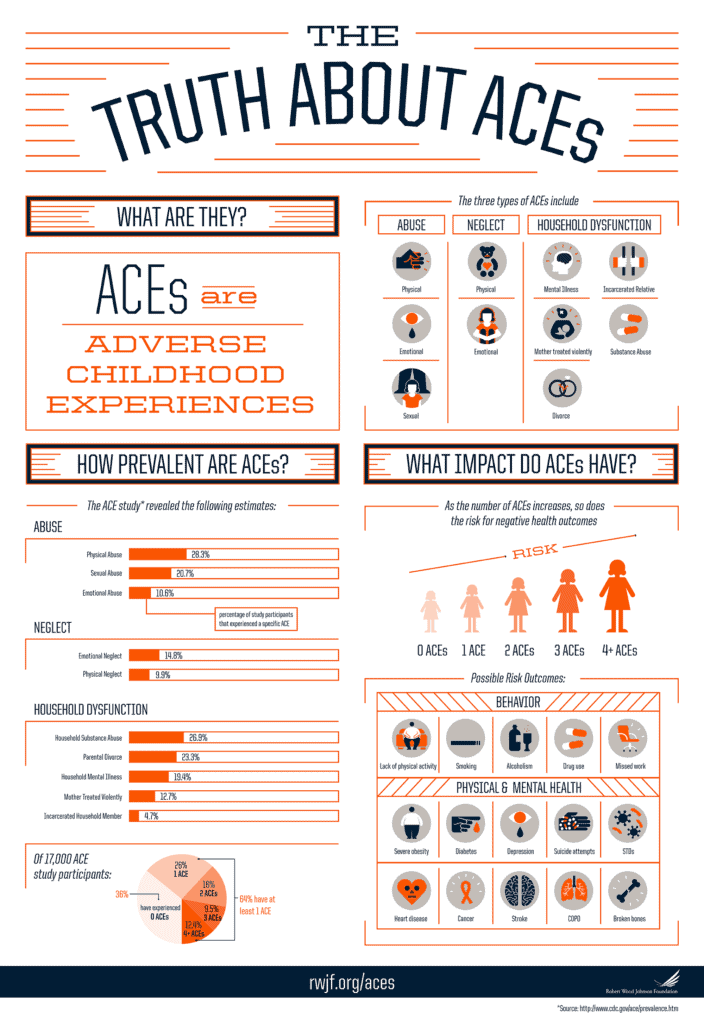
AllThese early childhood experiences are building her character. I believe every parent must see the following chart so that they can protect their chid from adverse experiences.


We had to quickly child proof our house, all plug points sealed, all hanging wires concealed, all shoes in the rack, all important books out of reach, any small things that has potential choking hazard removed from sight, and all sharp objects hidden. They say that your house gets redecorated after your wife moves in, well babies are no different. However, we have not stripped clean the room of everything. There is still enough stuff for her to explore, toys to play with, teeters to chew, sofas to hold and stand, and books to eat. Her playground is now the floor as freefall from beds is dangerous. Even than we have to be constantly alert. It is a full time job, specially for her mom who is alone when I am in office. Surprisingly she manages it all along with all the other wrks and doesn't want a baby-sitter. One reason why women were given the task of being mother was because they are the only species who has that qualification. Our constant surveillance has not prevented Hridhima from falling, but falling has not deterred her urge to stand. We were perplexed by her perseverance. I wish this spirit stays with her forever.

She is now a full-fledged member of our family who has her own character, her own likes and dislikes, her own mood swings. She even tries to communicate with us. After eating few pages from a book she got enough education and started speaking, “da-da”. It’s time to give her an encyclopedia for dinner.

Speaking of dinner, she has also started eating solids and drinking water. People often get surprised to see her drink from glass at this early age. Like I always say, they are smarter that we think. Boiled potato is her favorite dish. What goes in has to come out. The more she eats like us, the more she shits like us. The smell of her potty was the first noticeable change after the solids were started. But solid food gives us more freedom of travelling, not that it has stopped us from travelling before. She already had travelled to many places. Last month we went to Kolkata for her ‘Annaprasan’ and she grabbed pen from the all the options in the tray. Do we have a writer here? It’s her life, she will be what she wants to be, and I don’t want to bias her. 

Friday, March 23, 2012

17. Lil Smartie


As babies change from a non-reacting doll to an overreacting toddler, they observe, learn and grow. One might ignore their presence thinking that they are too small, but they observe everything and pick up very fast. They are smarter than we think. One thing I have learned in five months of parenting is that you don’t need to teach them what they should do next, they will tell you instead and help you evolve as a parent.

It is probably a good idea to decide early what kind of parent you would want to be, because these early years will decide the fate you your young one.
There are four types of parenting style, and we were Authoritative Parents. 


When she was few weeks old Hridhima started with moving her hands and legs as if to strengthen her muscles to be ready for her next step. Moment she knew she was ready she started trying hard to roll over. She finally managed after trying hard for a week, step two complete. She can manage to crawl now but she isn’t very fond of it, she would rather walk. Whatever she finds infront of her, she holds it and tries to stand. Falling and getting hurt doesn’t dampen her urge to stand and walk like we do. And when she finally manages to stand with support or holding our hands she becomes so happy that she starts laughing.


Just like they tell you what their next step is, they also tell you what they feel. You don’t need the jargons of literature to convey feelings. Adults often get irritated when the babies cry. But one has to realize that they are crying only because they have a genuine reason. Babes don’t pretend. After a stressful day’s work it is very easy to lose one’s temper, I did many times, but it only helps to make matter worse. It is important to remain calm and understand the problem, most often than not you do.


Again, they smile only when they mean to. She smiles when we smile, she laughs when we make strange noise, she giggles when she sees her reflection in the mirror, and now she even smiles when she sees her smiling video in the computer. But when Hridhima had fever she stopped smiling for two weeks. Babies become serious when sick. We were so worried. But her smile returned moment she was fit, and now she is all smiles again. As long as she smiles we know she is fine.


Monday, February 27, 2012

16. Finger-licking good

Hands are human beings first toy and mouth the first organ of pleasure. You fall in love with the world at the first bite. The flavour of your dirty hands inside your mouth is what I call finger-licking good, thumb-licking I mean.


Our thumbs are special.


Shyam Prabhakar from the Lawrence Berkeley National Laboratory had found out that a specific gene enhancer called HACNS1 might have been the magic ingredient that shaped our hands. HACNS1 is a DNA that controls the genes but is not a gene itself. It is the most rapidly evolving sequence of its kind in humans and is associated with our digit and limb pattern. This DNA gave us an elongate and fully opposable thumb, which in turn gave us the ability to make stone tools or hold this book (or digital device). 


The ability to grasp things, and with such precision, had a dramatic effect on our cognitive abilities. While our brain controls what we do, what we do changes it too. The advanced use of their hands by the hominids required hand-eye coordination, fine motor skill development, and the processing of large volumes of information. The more these hominids used their hands, the more complex and bigger their brains became. 


Babies are mouth-oriented; it really is their window to this new world. Through the mouth they get their first lessons of the globe around them. Putting things in the mouth may irritate parents but it helps the child develop her brain. There are mouth-toys developed exactly for that purpose. They come in all shape, size and texture. It also prepares them for solid food and helps them move on from nipples to spoons to cups.


Anything within the reach of Hridhima first goes into her mouth. Now that she has learned to grasp stuff we have to be careful of not keeping things with choking hazard near her. Whenever she sees something bright she tries to crawl towards it. If the object is far away, she needs breaks in-between. During the break she sucks her thumb for a brief while to get revitalized, and then she is off again. When she finally reaches the object, if it is too big to hold, then she touches it and then puts her thumb in her mouth, touches it again and puts her thumb back in her mouth. I guess she wonders why all big things tastes like thumb.


This wonderful development stage is called as the oral stage by Freud. In case you don’t like it and want your child to grow up fast, think about the next stage; Freud calls it the anal stage!

Sunday, February 12, 2012

15. Parents or Lovers?


Once upon a time there was a couple deeply in love, then they became parents.

Being parents is a wonderful feeling, life changes for good. But parenting can also become a full time job, and most often we become so obsessed parenting that we forget that we were once lovers. Remember the person who was there before your children came into being, it will be the same person who will be with you when you hairs grey, when your vision blur, when your legs become weak, and when your children grow-up and leave. Don’t let parenting make you forget the lover in you. It is from you that your children will learn to love.

There is another very important person whom we forget and ignore after becoming parents. That person it called ‘self’. Every person needs time for themselves. A time when they can do what-ever that makes them happy, a time for ones obsessions, a time for ones hobbies. It is one reason I still find time to read and write. It helps me relax and de-stress myself. Happy and stress free parents will result in happy and stress free kids. It’s the key to happy parenting.

Stress increases cortisol (stress hormone) secretion, which in turn increases the cortisol in mother’s milk. This can make the infants less confident, less social, nervous and cranky. Sons happen to be more sensitive to this than daughters. These behavioral traits stay with the kids even when they grow old.

Hridhima is 4 months now. She has become mobile and can turn and roll from one side of the bed to another. She is keeping us on our toes. Here is a video compilation of her.


Below is some useful reference charts for parents. These charts are just guidelines. Every child follows his/her own pattern. 


You can find the WHO growth reference chart in the following website:


This is how Hridhima is growing:

Following is a link to a website I found interesting.

Thursday, January 19, 2012

14. Sleeping Beauty


Our daughter is a sweetheart. She was born at noon, and was supposed to keep us awake through the night. Only in the first week she fed every three hours, which increased to 4 to 5 hrs of sleep at night by second week. By the time she was three months old she slept 8 hours through the night. Moment she keeps turning her head from one side to another, it means it’s time to sleep. She never gave us sleepless nights, lots of love and hugs to her for that.


Thursday, December 15, 2011

13. The Reward

 How much our life has changed!


Defying physics, that small 5kg thing now has the attraction of a blackhole. He has quickly become the center of our universe.

Life is slowly getting in terms with its new role, and we are enjoying every moment of it. The nappy changes are much easier than I thought. Even those greenish black sticky things did not feel like shit. Things like the changing colour (green to yellow) and texture (sticky to granular) of her potty actually made us happy. Never thought that even shit can bring so much joy. Someone rightly said, there is nothing bad in this world.

She is changing every day gifting us those precious ‘first’ moments. Slowly from a passive doll that could just eat, sleep and cry, she is becoming human.

She was 20 days old when smart lil Hridhima found out a new way to wake up when she was hungry. She grabbed her hair, pulled it, and started crying. 

Our daughter was born with a fair amount of hair on her head. While it made her look pretty, it was also a nuisance. There were times when we found her pulling her own hair and crying. Just a few months old, she had no command over her fingers. She would grasp anything she found near her, and her hair was one of them.

Quite like Abhimanyu from the Mahabharata, she knew how to grasp things but could not let go. In fact, she probably had no idea that the thing she wanted to pull and play with was attached to her. So, while she kept pulling it, she wondered why this damn toy was causing a painful sensation on her scalp. We had to help her let it go and get her baby gloves. Like all new parents, we freaked out about anything and everything that made her cry.

I wondered why she was doing that. Was she just playing or was that her way of communicating anger? 

After a bit of research, I found out that we were overthinking, something very typical of new parents of our species. What she was doing was just an involuntary grasping reflex and is common in babies. It is a vestigial memory from our primitive furry ancestors. This reflex ensured that the infants were clinging tightly to their mother’s fur while mommy was roaming around in the trees. The instinct had been encoded in our genes as an evolutionary survival mechanism that found no reason to get erased even after we lost our fur.

Her senses started to develop with time. We took her around letting her smell different fragrances, hear different sounds, see different things around.

Amongst all the things our white ceiling is her favorite. She can look at it all day making us wonder what’s so special about it. May be she would grow up to be a philosopher.

Soon she realized that she has a pair of hands. From that moment onwards all she wanted was to eat them. Those are her first toys, and what a wonderful toy they are, stupid adults can ever understand.

Apart from her hands and the white ceiling, she also began to recognize us. She now looks directly into our eyes, follows our movements, and wants to be with us. She hates being alone.

She also learned to talk. We talk a lot with her, read her books. And she reciprocates.
‎"aaangaaa aaagguuuuu aaaaiiiiii hnaaa"
>>>>English translation >>>
"Take me in your lap”.

All these changes as she grows are amazing, but the best gift she keeps giving us is her smile. She was almost a month old when she gave her first social smile. Those toothless smiles are heavenly; it makes you forget everything else. Oh! There she smiles again! Now I forgot what to write.

Sunday, November 13, 2011

12. Advice Advice!

First time parents find themselves short of time, space, sleep and sex. But there is one thing they won’t find themselves short of – advice. 

From the aaya in the hospital, to the stranger in the road, to your over-paid maid; everyone will have at-least one advice for you. Luckily you can easily ignore their advice. It is the advice from your close friends and families that you will find hard to ignore. And you know what is worse? Two mother-in-laws together, with totally opposite advice. Yes, you are trapped, you have reached the limit of your temper, and you are about to burst. Your ego might make you want to shout, ‘It is our child, you have had your share of parenting, let us have ours’. That's exactly how we felt.

Take a deep breath, relax, and ask yourself; what is more important, your ego or your child? 

Anger never helps; respecting your parents is a way of ensuring that your child learns to respect you. The day your parents stop advising you is the day they have given up on you and may be even stopped caring.

Moreover, some of their advice are really worth listening, for others there is a simple trick. This is where your doctor comes to rescue.  Tell them that the doctor told you not to do it. It always works! Sometimes a lie is worth a thousand truth.

Listen to all advice and cleverly use your veto power to rule out the horrible ones. At the end, it is your instincts that matter, even more than your logic.

Earlier, I wished if babies came with instruction manual. The truth is, they do. It is already implanted in the brains of the parents. Listen to it and believe it even more than the doctor’s advice, because doctor’s advice change with time, space and society.

During the feminist movements doctors advised bottle and formula feeding. Now with the green movements and movements to go back to nature, breastfeeding is back on agenda. There was a time when doctors advised to let the babies sleep on their tummies so that they don’t choke, now they advise that they must sleep on their back. There was a time when oil message was mandatory for babies, now they advise to avoid it. You see what I mean?

There's a compelling evolutionary reason for the significance of advice. Observe newborns: compared to other animal babies, human infants are remarkably immature. They cannot walk, talk, or survive alone. This prolonged period of dependency necessitated extended caregiving. Not only did parents collaborate, but grandparents, with their wealth of experience, also played a vital role. In some cases, the entire tribe came together to nurture the young. And all of them came with advice.

Humans are not only born immature; we also experience a lengthy childhood. No other species enjoys such an extended period of development. These adaptations were driven by the demands of our larger brains, which, despite their advantages, also posed challenges. However, the gamble paid off.

The extended caregiving period allowed human children to spend more time observing and learning from their elders. This facilitated cultural transmission, enabling rapid adaptation to changing environments. Our neocortex, the part of the brain responsible for higher-order thinking, doesn't fully mature until around age 25. This makes us particularly susceptible to cultural influences, shaping our character and beliefs.

While our prolonged infancy may seem like a disadvantage, it has ultimately contributed to our success as a species. The benefits of cultural inheritance far outweigh the drawbacks of a longer developmental period, enabling us to create and maintain complex societies and technological advancements.

Every baby is different; everyone grows at their own pace. Different advice works for different babies. Listen to yourself and find the one that suites your baby best. Here is the end of my advice. Use your veto power to over-rule it if you like.

Saturday, November 5, 2011

11. New Member

After nine months baby is finally here. The battle is won, but the war has just begun.

When we first saw her during USG she looked so cute and we wondered when we are going to hold her. Now she is here, and she looks prettier, but she looks fragile too. 

Unlike our new washing machine, here was no ‘handle with care’ or ‘this side up’ sign attached to her! She did not come with any instruction manual.

I was afraid to hold her the first time. But I soon got better of my fear and there she was, in my arms. My first lesson – babies don’t break easily.

To start with, there was a big communication gap. While she looked like a human, she spoke like an alien. The language in which this cute little alien spoke is called: Crying.

Hungry-cry…potty-cry…piss-cry, pissed off-cry. If not an instruction manual, what about a Crying to English dictionary?

But soon we started to understand that language. We could differentiate between the cry that meant she is hungry, the cry that meant change my nappy, the cry that meant I have a stomach ache, or the room is either too hot or freezing cold, and the one that simple meant hold me. I liked the fact that this language had no grammar, I hate grammars. Lesson 2 – crying is babies first language. Know it and the baby is going to speak to you.

But no father even evolved to understand the Crying-language better than mothers, thanks to the port pregnancy brain growth (pruning).

Parentese Language and Child-Directed Speech are essential components in a mother's interaction with her child, that helps the baby learn human language. These specialized forms of speech are designed to make communication easier for the baby.

Parentese Language is characterized by a higher pitch, exaggerated intonation, and slower speech rate. These features make it easier for babies to hear and understand the spoken words.
Child-Directed Speech on the other hand involves simplified vocabulary, shorter sentences, and repetition. It helps the baby grasp the meaning of words and phrases.

During the first three months, a baby is primarily focused on understanding sounds. They are developing their auditory skills and learning to distinguish different sounds in their environment. In the subsequent three months, they begin to grasp a few commands and experiment with babbling sounds. This marks the initial stages of language development.

By the age of one, a baby may have acquired a small vocabulary and be able to speak a few words. The mother's use of parentese and child-directed speech plays a crucial role in this early language acquisition process. But that was still far away.

We were concerned parents in the beginning. We worried about everything that we could possibly worry about. Is the room temperature right? Is the baby feeding well? What will happen to her in Diwali with all that noise? Why is her tongue always out? Why is she having hiccups for so long? Is she burping properly? How to hold her extra flexible soft neck? Is she having enough sleep? Why is she spitting so much? Most of the time, like for men, a pair of caring arms, or a pair of breasts calms a baby down. 

Only once was she very cranky and cried a lot. We called the doctor and he recommended some colic drops. 6 drops and she was fine. 

With time we also calmed down as parents and started enjoying this new phase. We realized spitting isn’t a health problem; it is more of a laundry problem. We realized that as long as she is passing urine more than 7 times a day she is feeding well.

Doctor provided us with child development graphs and she was growing perfectly. Lesson 3 - There is nothing to worry, let things flow naturally.

One good thing about Hridhima is that she doesn’t cry much. She is the happiest baby in town…and she smiles a lot. I am sure it is not gas all the time, most of the time it is because she feels comfortable. And the best part, she loves to sleep through the night. She needs a feed only once in the middle of the night, rest of the time she lets us sleep. Who said babies gives sleepless nights? She is such a sweetheart. 


Saturday, October 29, 2011

10. The D-Day!

My wife got admitted on the night of 4th October when we went for a regular checkup, ten days before the due date. We stayed overnight in the delivery suite. Next day morning our parents joined us.

She was having strong contractions. The doctor ordered us to take a seat in the sofa, and closed the curtains. I wonder why in India they still don’t allow the husband to be with his wife during normal delivery.

As we waited tensions were rising. I could hear the doctor shout, “Don’t push yet, take deep breath” a couple of times. After few minutes I heard them again. This time they shouted, “Push! Push! Push!”… Then there was silence. Then again “Push! Push! Push!”… and again silence. “Push! Push! Push!”…silence….“Push! Push! Push!”…silence….“Push! Push! Push!”… and then we heard the baby cry! I could see tears rolling down the cheeks of both our moms. My eyes? They were dry, so was my throat. She chose the auspicious day of Navami to come out!

Mommy was doing well. She is a girl who doesn't take a single moment to cry while watching movies, or because she unknowingly hurt someone. She is also a girl who went through the entire labor without shedding a single drop of tear. I overheard one of the Bengali aaya saying to another one from Madras with pride, "See? Have you ever seen anyone not shouting, crying, and making a scene while normal delivery? That is a Bengali girl! We are strong."

We are Indians, we love our state boundaries more than our country boundary. I whispered in my mind, she is strong not because she was born in a particular corner of India, but because she is SHE. Many times have her courage inspired me, and this was one such occasion. 

They showed us the baby. It was a princess…and she looked so cute…and then they took her away to the nursery. Guess we have to wait a bit longer.

She was an active baby weighing 2.94kgs with APGAR (five-point score of baby’s health) score of 9/10 within first 1min. Baby was also doing well.

This was the first day of the rest of her life.

We moved to our booked room. After a couple of hours my wife was transferred to the room, and after few more long hours, Hridhima. All of us were together, our family looked complete. There was another girl born few rooms from us. Apart from that there were 8 boys born on that day. I wondered why the sex ratio was so skewed. What happened to the other six girls who were never born? But it was not the right time to think about that, it was time to enjoy with our family.

Since everything went smoothly, my wife was discharged the next day. 
But then we had our first scare. Within 48hours Hridhima was admitted to the nursery again with jaundice. It was minor and we learnt that it is very common in babies. 
Bilirubin is a yellow substance produced by the body when red blood cells break down. It passes through the liver and is then excreted from the body. Before the baby is born, mom’s liver does the job of removing the bilirubin through the placenta. Once the baby is born and the placenta is disconnected, baby’s liver must take over. The handover takes couple of days. So, the first few days the bilirubin may spike up and baby turn yellow. Nothing to worry about, we are told. 24 hours of photo-treatment and she was back to her active healthy state. 

I had another interesting observation that day. Not a single delivery happened on that day as all rooms were empty. Puja was over; everyone chose an auspicious time to have their child, so what if it was not normal delivery? That’s India. But again, not the right time to think about it, Hridhima was healthy, and we were happy!


Sunday, October 23, 2011

09. As D-Day Approaches

They say ‘mard ko dard nahi hota’ (men does not feel pain) with pride. But they forget, aurat ko dard hota hai tab hi jaa ke maard payda hota hai! It’s through the pain of a woman that men are born. Pain is not something to be ashamed of.

Some people says that women forget the pain of labor, had they remembered they would have never wanted to be pregnant again. The researchers have underestimated mothers. If that was true, they would have fainted during labor itself. In fact, I have heard many men fainting just watching their wives. Truth is, men not only feel the pain, but are afraid as well, especially so, in the last few months. It is normal for both of you to worry about the final delivery. This too shall pass!

Human childbirth is so weird that it almost defies evolution. Pain is an evolutionary warning to avoid life-threatening things. Why than is give giving childbirth painful in humans? In fact the saying that women forget the pain of labor is not entirely true. It may be true for mothers who has mild pain during childbirth, but definitely not for those who went through the trauma of painful birth. Human childbirth is not only painful, but also very risky for both mother and baby. It is a compromise evolution made to help us stand on our feet.

Becoming upright made us weak, slow, and poor tree climbers. The pain you may have in your back from the long office hours, you can thank bipedalism for it. In this new arrangement, the pelvis had to bear our full weight when we stand. So, it needed a small alteration that gave the pelvis of bipedallers a unique shape. The load on the pelvis reshaped the legs in a way that females now have a narrower birth canal, not convenient for delivering babies. Evolution had to trade-off between the advantages of bipedalism versus the risks of giving birth.

The narrow birth canal meant that the baby had to come out before its head was fully-grown. Homo sapiens babies are born with a brain size of less than 30% of adults. That makes our kids more immature at birth than the newborns of any other species. Adolf Portmann dubbed this as “secondary altriciality”, and Ashley Montagu calls it “exterogestate fetuses”. It takes at least a full year for a newborn Homo sapien baby to reach the mental level of a newborn great ape. That’s a lot of time being vulnerable in a wild world.

But, at the end, it all works out. Thankfully, we don’t live in the wild anymore.

One thing that made us really worried was baby’s movement. 22weeks passed and we could not feel her move. Then on the 23th week she told me that she felt something in her stomach. Is it gas, or is she moving? She was sure it was our baby. I still could not feel her, but she did.

Few weeks later I felt her for the first time. Those jerks and kicks grew stronger as weeks passed, and then we could actually see her move! She was probably dancing to the beat ‘I like to move it move it!’ We talked to her, sang her songs. Isn’t it amazing that she could actually hear us?

The last few months can be tiring. The baby grows rapidly creating stretch marks in mommy’s tummy. Don’t be afraid when you look at your wife’s tummy, be happy for the fact that your baby is growing well. Some of her pregnancy symptoms return in the last trimester. She might be having back aches as well. This is your excuse to touch your wife, give her a gently message. Easy way to add some points to your kitty. Remember, happy wife means happy life!

MRI scans have shown that mothers brain shrinks by 5% in the third trimester. While we focus on the changes in mother’s body, it is the brain that changes the most. The loss of grey matter is not a cause of concern, barring memory loss, occasional mood swings, sleep issues during pregnancy. But they are temporary. Things gets better after pregnancy and the grey matter is regained. This is an extra phase of brain development that males miss. Mother’s brain gets totally rewired post pregnancy and grows in areas related to childcare. This helps mothers understand kids expressions and needs better.

Technology has advanced a lot. We went for the third trimester Doppler USG. That’s when we saw her face for the first time. That face finally looks like a human being. She is no alien. Now it was the long wait for the day we were actually going to hold her.


Saturday, October 22, 2011

08. Name Game!

One of my friends once asked me if I want a boy or a girl. 
I said, “A girl.”
She inquired, “Why?” 
Obviously, I had a selfish reason, “Girls are daddy’s girls!” 

But over time that feeling changed. Many people came and blessed my wife saying that she is going to have a boy. Some even went to the extent of predicting a boy from the shape of her tummy. As if pregnancy was an exam and its success and failure depend on the sex of the newborn. 

It made rebel in both of us feel like we desperately need a girl. We realized that we were making a mistake, but it was a feeling that we could not get rid of. We were lucky that we had a little princess as we desired, but what if it was a boy? In our stupid desire to prove the society wrong, could we have given him justice? Our prejudice against a boy was no different from the one society, in general, has against a girl.

Lesson learnt: never try to predict the sex of the baby, you are lucky either way.

Our prejudice was so strong that we had chosen only one name, and that was a name of a girl. Considering the long list of criteria’s we had, it wasn’t an easy task. We made a list of our criteria’s and then goggled. From Indian to Egyptian, we searched all possible names and ended up with one – Hridhima.

Here goes our long list of criteria.
-        The name should start with ‘H’. All the names of babies in our family starts with ‘S’, my moms initial. It was as per my father’s wish. So, my wife wanted our child’s name to start with my dad’s initial instead.
-         We wanted it to be something that is not Bong-ish, we wanted our baby to have a name that is more Indian than a name that is state specific.
-         We wanted the name to be secular, not associated with any particular religion, like a god’s name.
-         We did not want it to be anything that is materialistic, like money, wealth, power, etc.
-         We did not want it to be a name that is easily mispronounced.
-         Obviously, we wanted it to sound good.
-         We preferred something related to happiness, smile, love or peace.

Well, never told you that it's an easy job.

After a lot of search and research we finally came up with Hridhima. ‘Hridhaya’ means heart and ‘ma’ means loving. It may not be an exact word in Sanskrit, but Hridhima, to us, meant a loving heart. And that’s what our sweetheart is called.

Friday, October 21, 2011

07. Sympathy Pain?

If you think it is only the women who suffers the pains of pregnancy, think again. Recent studies have shown that men also suffer pregnancy symptoms with their partner. From cramps to morning sickness, to food carvings, to gaining weight, to mood swings, to contractions, they have it all. In fact, some men are reported to have a swollen stomach as well. Don’t believe me? Google Couvade syndrome. 

The true cause is still debatable, but one thing is confirmed by the research, sympathy pains are for real.

I find the term funny because it is not supposed to be due to sympathy. As per research men aren’t seeking attention, rather this strange behavior is completely involuntary. At the same time none of the symptoms are associated with pain. 

Couvade Syndrome is the more scientific term. Some researchers have tried to explain it with mirror neurons that makes you cry when you see someone else cry or laugh for that matter. It is the same neuron that makes you mirror your wife’s pregnancy.

A particular gentleman claimed to have sympathy pain even before his wife realized that she was pregnant. Scientists have explanations for that too. He probably smelled the pregnancy hormones that triggered the sympathy pain. Millions of years of evolutionary memory fools a man to believe he is pregnant! Who knows. 

That’s for the research part; the question you guys are probably having now is, “Did it happen to you?”

Well, there is no simple answer, maybe, maybe not.

I did gain some weight during the nine months, and I lost some since Hridhima was born. But I have been gaining weight for the past 4yrs, and the new schedule of changing nappies is supposed to make me lose some! So, does that count?

Occasionally I also felt like puking when I climbed up or down the stairs. That happened only few times and I don’t know if that counts as well. But none of my symptoms were as dramatic as the ones mentioned in some of the research. My conclusion is, even though there is some truth element to it, the whole concept of sympathy pains might be a bit overhyped. But then, there are stranger things in this world.

Thursday, October 20, 2011

06. She is Back!

Once the first three months were over, she felt a lot better. She was back to herself. We planned a short vacation to lazy Kasauli, our first trip with Hridhima. Next 6 months passed smoothly without any trouble. We didn't even realize how fast the time passed. 

No matter what people say, don’t worry, travelling does not harm the baby, nor does sex. Unless there are some other complications and doctor recommended extra caution.

Your wife is back, and the next three months are the best months during pregnancy. It is time for both of you to slow down and enjoy the phase. Spend time together, help each other, read her books she likes and listen to music.

Sex is back in your life. Yes, women have a slightly bigger tummy by now, but they also has bigger boobs! Unfortunately, they come with a touch-me-not sign. They are big alright, but painful as well. Be careful, you would not really want to hurt her, would you?

It is time to pamper your wife, but make sure you don’t overdo the pampering. She will know how much food she needs, leave it to her. Don’t let anyone force her to eat more than she requires. Else you will end up with a wife more than you have bargained for. She only requires 2600calorie/day, just 400calorie/day more than normal.

Remember to attend ante-natal classes together. Make sure that she is active. The more active one is the easier will be the delivery.

Only 500ml blood is lost during normal delivery (NDV) compared to 1000ml during cesarean. NDV is much less traumatic for mother. That’s why WHO recommends 3:1 ratio for NVD. Unfortunately, ratio in India is reversed. So, if you love your wife and want a less painful NDV, let her be active. She is pregnant and not a patient, she can lead a perfectly normal life if only people let her be.

We went for another USG, and this time we could see her limbs, see her heart pump, and a faint outline of her head. She still looks like an alien, but a more recognizable one. That was a wow moment!

Human fetus development is a complex and highly orchestrated process. The formation of the gut and organ systems is crucial for the fetus's growth and survival. Understanding these stages provides valuable insights into human embryology and the importance of proper fetal development.

- Week 3-4: Germ disc folding and gut formation
- Week 4-8: Foregut development
- Week 8-12: Midgut development
- Week 12-16: Hindgut development
- Week 4-16: Organ rotation and positioning
- Week 6-10: Gut herniation and rotation
- Week 6-8: Cloacal separation
- Week 4-8: Mouth and anus formation


The one that is marked is her hand!